
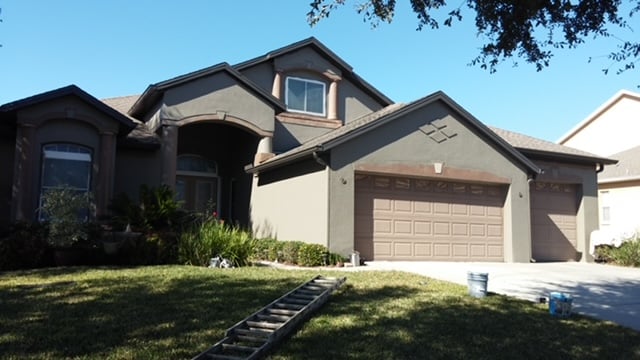
Stucco cracks have to be fixed before you paint, or the new coat won’t hold up. Paint can’t stabilize failing stucco or stop moisture that’s already trapped behind it. Kingdom Painting repairs what’s underneath first, then applies coating systems built for Florida’s climate.
Should I Fix Stucco Cracks Before Painting?
You need to fix stucco cracks before painting when the damage is active, widening, or tied to moisture. Paint cannot stabilize failing stucco. Skipping repair on problem cracks traps water inside the wall. That leads to faster cracking, peeling, blistering, or full coating failure in Florida’s afternoon downpours.
Not every crack needs heavy repair. Stable hairline cracks on clean, sound stucco are the kind an elastomeric coating is made to bridge. The decision hinges on how wide the crack is and whether it’s still moving.
Hairline Cracks vs. Structural Cracks
Most stucco cracking is normal. Sika’s technical bulletin on cement plaster stucco notes that hairline cracking from drying, and small cracks at the corners of windows, doors, and other stress points, are expected and aren’t a sign of bad stucco work. Settlement, movement, impact, and heavy loads can also cause cracking, and Sika recommends bringing in a qualified engineering firm when a crack raises questions.
The U.S. General Services Administration classifies cracks that change in width, direction, or depth over time as “active.” Both active and dormant cracks can let moisture in, so size alone isn’t the only thing that matters.
If you notice stair-step or diagonal cracks, or doors and windows that start sticking, have it looked at. A structural engineer or qualified contractor is the right call for that, before any painting happens.
Kingdom Painting handles surface crack prep and painting, not structural repair. If what you’re seeing points to a structural issue, get that addressed first, then we’ll take care of the stucco and the paint.
What happens if I paint over unaddressed stucco cracks?
Regular paint over an open crack can split again once the crack moves, letting water in behind the new coat. The U.S. General Services Administration notes that both active and dormant cracks can let moisture in, which is why cracks get sealed before any paint goes on.
How Wide Is Too Wide? Matching the Repair to the Crack
A pro crack repair starts with matching the fix to the crack’s actual width, not guesswork. Benjamin Moore’s Ultra Spec Masonry Elastomeric data sheet draws the line at 1/32 of an inch: cracks that size or smaller get bridged by the elastomeric coating itself. Cracks between 1/32 and 1/16 of an inch need caulk first, then a brush- or knife-grade elastomeric patch over it. Cracks wider than 1/16 of an inch get routed out to about 1/4 by 1/4 inch and repaired with caulk and patch before any finish coat goes on. Behr’s data sheet gives the same 1/16-inch cutoff, calling for wider cracks to be routed open and patched with an elastomeric patching compound.
How to Repair Hairline Cracks in Stucco
The wall gets cleaned first, since dust and loose grit keep any patch from bonding. From there, the repair is matched to the crack’s width per the manufacturer data sheets: hairline cracks get bridged directly by the elastomeric coating, moderate cracks get caulked and patched, and wider cracks get routed out before caulk and patch go on. Every patch cures fully before primer or paint touches the wall. For the materials, Kingdom Painting relies on coatings from Sherwin-Williams, Behr, and Benjamin Moore.
| Crack type | Width | Repair method |
|---|---|---|
| Hairline | Up to 1/32 inch | Elastomeric coating bridges it directly |
| Moderate | 1/32 to 1/16 inch | Caulk, then a brush- or knife-grade elastomeric patch |
| Wide | Wider than 1/16 inch | Rout to about 1/4 by 1/4 inch, then caulk and patch before finishing |
Seeing cracks in your stucco? Let us take a look.
Get a Free EstimateGet a Free Estimate · Call (407) 394-1020
Or call (407) 394-1020, Monday to Friday, 7:30am to 4:30pm.
How Kingdom Painting Preps Stucco Before Painting
Every exterior job starts with a soft wash, not a blast, and that pressure washing is included in the job. We let the surface dry fully before we prime, because paint won’t bond to mildew, dirt, or chalk still sitting on the wall.
From there, we handle what the stucco itself is doing. Settling and hairline cracks get sealed with elastomeric, and caulk goes wherever it’s needed. Where the surface calls for it, we apply a masonry conditioner or sealer before paint goes on.
Prep also covers what doesn’t get painted. Windows and anything else we’re not coating get masked off first.
Then we paint:
- Stucco is sprayed and back-rolled for even coverage
- Trim is brushed and rolled by hand
- Two coats are standard on every exterior, and a deep or dramatic color change gets a third coat, priced up front
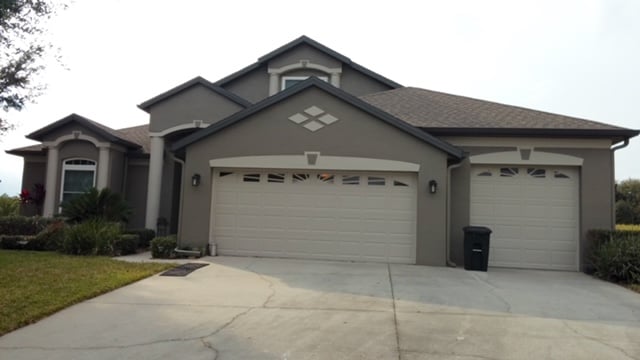
If we find rotted wood along the way, we photograph it, show you, and price the wood repair before we touch it. Our own carpentry crew handles the replacement. We close out every job with a final walkthrough with you.
Is Elastomeric Paint for Stucco Worth It?
Yes. Elastomeric coatings are built to go over an entire stucco wall, not just the cracks. Sherwin-Williams’ ConFlex XL High Build elastomeric bridges hairline cracks, blocks wind-driven rain, and is designed not to trap moisture vapor inside the wall. Benjamin Moore’s Ultra Spec Masonry Elastomeric Waterproof Coating bridges cracks up to 1/32 inch, and Behr’s Premium Elastomeric Masonry, Stucco & Brick Paint bridges hairline cracks as well.
Any of these systems can cover the full elevation, giving the wall a flexible, weather-resistant skin on top of the crack repair work you already did.
When Is the Best Weather to Seal Stucco Cracks and Paint?
Weather matters as much as the repair itself. Behr’s data sheet for its Premium Elastomeric Masonry, Stucco & Brick Paint calls for air and surface temperatures between 50 and 90 degrees F, and warns against painting if rain or heavy dew is expected within 24 hours. Under good conditions it dries in 4 to 6 hours and is ready to recoat at 24 hours, though cooler temperatures and higher humidity stretch those times out.
Benjamin Moore’s Ultra Spec Masonry Elastomeric data sheet sets similar limits: don’t apply below 50 or above 100 degrees F, and skip it if rain is expected within 24 hours. At 77 degrees F and 50 percent humidity, it recoats in 12 hours, but high humidity and cool temperatures slow that down.
That’s why Central Florida’s drier fall and winter months are a smart time to schedule stucco repair and an exterior repaint. Here’s more on the best time to paint your home’s exterior in Central Florida.
What Common Mistakes Should You Avoid?
A few prep mistakes cause most of the trouble with painted stucco.
- Painting over active cracks. Paint cannot stabilize failing stucco. Coating over widening or moisture-related cracks traps water and leads to faster cracking, peeling, blistering, or coating failure.
- Skipping pressure washing. Dirt and loose material left on the surface prevent caulk and paint from bonding. Kingdom Painting’s preparation process removes that debris before any repair or coating goes on.
- Painting over a structural crack. If a crack is wide, growing, or comes with sticking doors or windows, have it evaluated before any paint goes on.
- Treating every crack the same. Hairline cracks need different handling than active or impact-damaged cracks. Misdiagnosing the crack type wastes materials and shortens the coating’s life.
Stucco Crack FAQs
Can elastomeric paint cover stucco cracks?
It bridges hairline cracks. Benjamin Moore rates its Ultra Spec Masonry Elastomeric for cracks up to 1/32 inch, and wider cracks get caulk and an elastomeric patch first.
Do you pressure wash stucco before painting?
Always, and it’s included. Kingdom soft washes stucco rather than blasting it, then lets it dry fully before priming.
How long does an exterior paint job take?
A typical single-story runs three to four days and a two-story four to six, including wash time and any wood repair. Summer afternoon storms can add a day.
Does Kingdom Painting repair structural cracks?
No. Kingdom handles surface crack prep and painting; if a crack looks structural, have a structural engineer or qualified contractor evaluate it first.
Get Your Stucco Checked Before the Dry Season Fills Up
Kingdom Painting will walk every side of your house, look at the cracks and failing caulk, and tell you straight what needs repair before any exterior painting starts. That includes pressure washing to clear the surface and wood repair where rot has set in. You’ll get a free written estimate with no pushy follow-up, so you know exactly what you’re getting into before you decide.
Want your stucco sealed and painted while the weather’s on your side?
Get a Free EstimateGet a Free Estimate · Call (407) 394-1020
Or call (407) 394-1020, Monday to Friday, 7:30am to 4:30pm.