
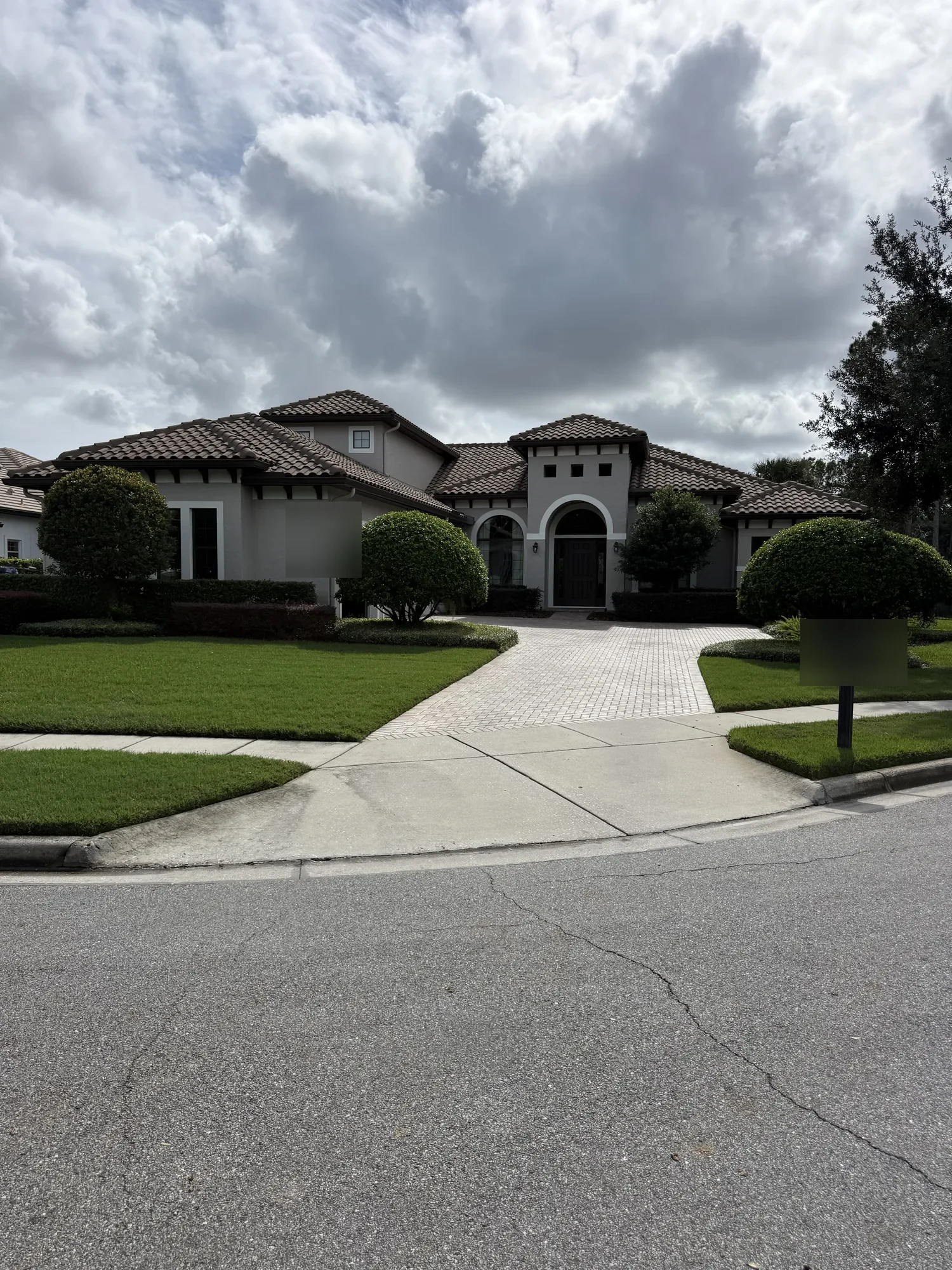
So, what is elastomeric paint? It’s a thick, flexible, 100% acrylic coating made for stucco and other masonry surfaces. Because it stretches, the film can move with hairline cracks in the wall instead of splitting along them, and it goes on noticeably thicker than a regular acrylic exterior paint. Acrylic exterior paint goes on thinner and, in owner Donnie Smith’s experience, holds its color better over time. On most Central Florida stucco homes, Kingdom Painting uses a hybrid: elastomeric only on the cracks, then an acrylic topcoat over the whole house. If someone has told you to “go elastomeric” on your next repaint, here’s how the two compare, where each one fits, and the cure and dry times straight from the manufacturer’s data sheets.
What elastomeric paint is
Elastomeric exterior paint is designed to stretch. Sherwin-Williams’ ConFlex SherLastic Elastomeric Coating data sheet spells out the numbers:
- It’s 100% acrylic and made for tilt-up, precast and poured concrete, CMU (block) and stucco.
- It stretches. The data sheet lists 175% elongation in lab testing (ASTM D2370). That stretch lets the film move with hairline cracks instead of splitting along them.
- It goes on thick. The two-coat system calls for 4.3 to 5.8 mils dry per coat, and a waterproofing system needs a total of 8 to 12 dry mils with 10 or fewer pinholes per square foot.
- It’s tested for wind-driven rain (ASTM D6904) and still lets water vapor move through the film (34.4 US perms in the data sheet’s test).
- It’s mildew resistant and covers 107 to 145 square feet per gallon, per coat, in the two-coat system.
What acrylic exterior paint is
A standard acrylic exterior paint builds a thinner film. The acrylic on the house in the photo below is Sherwin-Williams Duration Exterior in satin. Its Duration Exterior Acrylic Satin data sheet lists:
- Self-priming on most surfaces, with stucco on the list. Two coats on new, bare surfaces, or one coat on a repaint.
- A thinner film: 2.0 to 2.4 mils dry per coat, covering 250 to 300 square feet per gallon.
- Low-temperature application down to 35 degrees, as long as the surface, air and paint are at least 5 degrees above the dew point.
- A mildew-resistant film, and a satin finish of 10 to 20 gloss units at 60 degrees.
Elastomeric vs. acrylic, side by side
| SherLastic Elastomeric | Duration Exterior Satin (acrylic) | |
|---|---|---|
| Dry film per coat | 4.3 to 5.8 mils | 2.0 to 2.4 mils |
| Coverage per gallon | 107 to 145 sq ft | 250 to 300 sq ft |
| Application temperature | 50 to 100 degrees | Down to 35 degrees |
| Dry to touch / recoat | 4 hours / 24 hours (77 degrees, 50% RH) | 1 hour / 4 hours (45 degrees and up, 50% RH) |
| Stretch | 175% elongation | Not listed |
All figures come from the two Sherwin-Williams data sheets linked above. Both say drying time depends on temperature, humidity and film thickness.
The color question
Here’s where field experience comes in. In Donnie’s experience, elastomeric paint doesn’t hold its color as well over time as acrylic does. That’s what he’s seen on Florida houses over the years, not a number from a data sheet. It’s the main reason Kingdom saves full elastomeric for a small share of stucco homes.
Donnie also prefers satin over flat for the topcoat. In his experience, a satin finish sheds water better than a flat one.
Elastomeric stucco paint in Florida: when it fits and when it doesn’t
Central Florida summers run hot and humid. Most of the year’s rain also falls in the summer wet season, often as heavy afternoon downpours (NWS Melbourne). That means your walls take a lot of wind-driven rain and sit damp more often than you might expect.
Kingdom puts a full elastomeric coating on about 1 in 40 of the homes it paints in a year. Donnie reserves it for high-moisture spots, like houses near a lake or in low-lying areas, where crack protection and water resistance matter more than how the color looks in a few years. That’s where an elastomeric coating for stucco earns its keep.
It doesn’t fit every house, though. If color retention matters most to you, Donnie leans acrylic instead. And the SherLastic data sheet rules elastomeric out entirely on horizontal surfaces where water collects, like floors, roofs and decks, on overhead surfaces like soffits and the undersides of balconies, and below grade, where it won’t withstand hydrostatic pressure.
Kingdom’s hybrid system
For most stucco homes, Kingdom combines the two so you get crack protection and color retention on the same house:
- Pressure wash. Mildew and dirt come off first. The SherLastic data sheet says to remove mildew before painting, and our pressure washing and soft washing page covers how we do it.
- Loxon Acrylic Conditioner. Donnie says Sherwin-Williams requires it to validate the warranty. Its data sheet describes it as a penetrating sealer that binds light chalk, for surfaces with a pH of 6 to 13. It’s dry to the touch in 30 minutes and ready to recoat in 3 hours at 77 degrees and 50% RH. On exteriors, it has to be topcoated within 7 days or the surface may need to be re-cleaned.
- Elastomeric on the cracks only. Settling cracks and hairline cracks get elastomeric. Bigger cracks need repair first. Read should you fix stucco cracks before painting for how we handle those.
- High-build acrylic topcoat. It goes over the whole house to fight fading. On the house in the photo below, that topcoat was Duration Exterior in satin.
Soft or rotted wood around the stucco is a separate job. Our wood repair crew replaces it before any coating goes on.
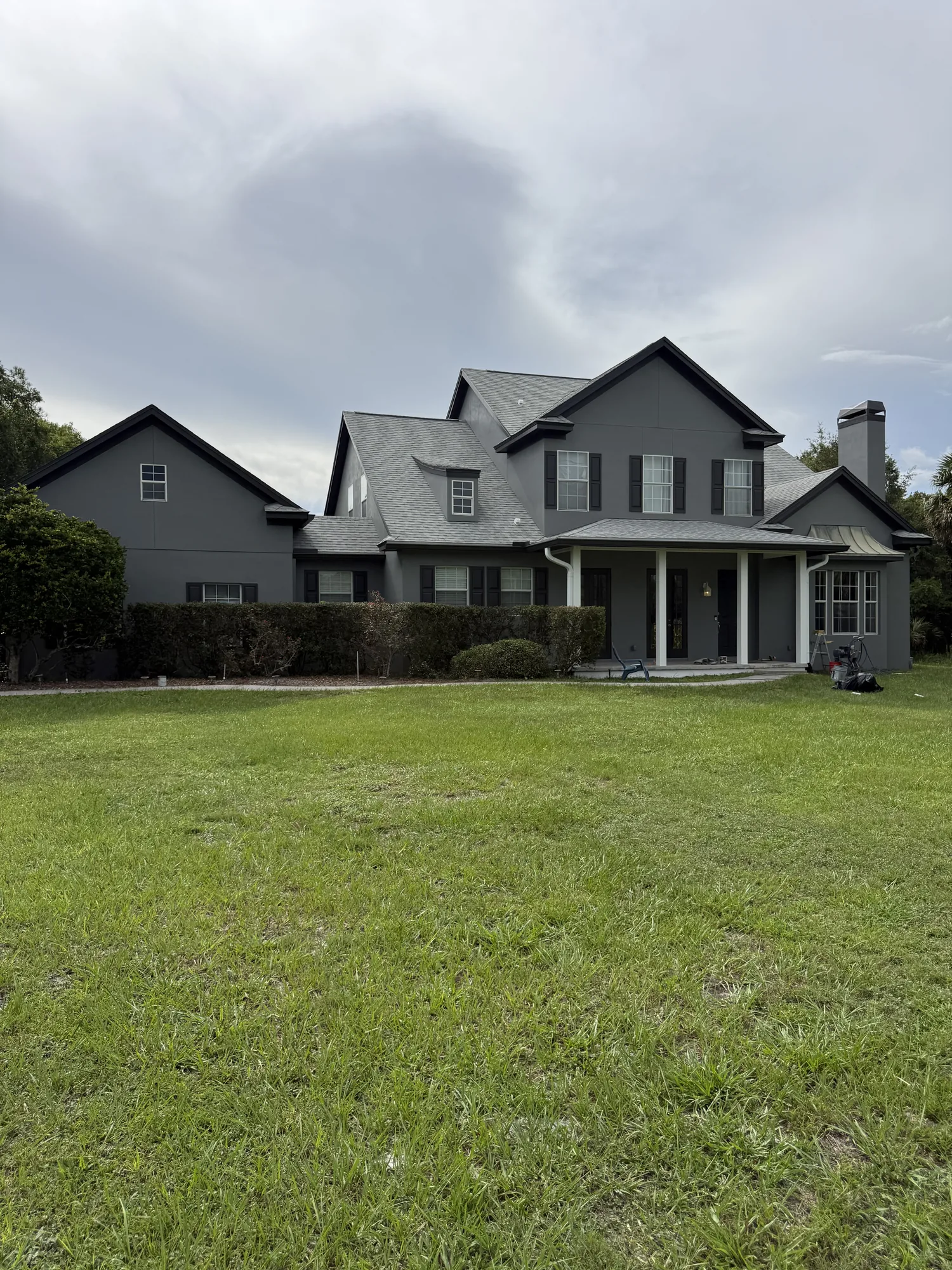
On the house in this photo, the crew pressure washed, applied Sherwin-Williams Loxon Conditioner, then finished with Sherwin-Williams Duration in satin.
Cure and dry times, straight from the data sheets
New stucco
The SherLastic data sheet says new masonry and stucco should cure according to the supplier’s recommendations, usually about 30 days. If you can’t wait 30 days, it says to let the surface cure 7 days at 75 degrees and prime it with Loxon Concrete & Masonry Primer. The Duration data sheet says surfaces with a pH above 9 must be primed with a high-pH-resistant coating like Loxon Concrete & Masonry Primer.
Application temperature
SherLastic goes on between 50 and 100 degrees, and Loxon Acrylic Conditioner needs 50 degrees and up. That 50-degree floor matters on a cool Central Florida morning. If the wall is cold and wet with dew at 8 a.m., the right move is to wait.
Another heavy-duty option
Sherwin-Williams’ Loxon XP Waterproofing Masonry Coating data sheet lists a high-build masonry coating that can go on fresh concrete at least 7 days old, on surfaces with a pH of 6 to 13, and down to 35 degrees. For waterproofing it calls for 2 coats and 13 to 16.8 total dry mils.
“Owner Donnie Smith and his crew were great to work with. They are one stop shopping as they fix stucco too. Completed work right on time. Owner Donnie comes out and inspects the property himself while the work is in progress. My neighbors are inquiring about who those polite painters were! I would definitely hire them again”
Robert Robbins, Google review
Common questions
Is elastomeric or acrylic paint better for stucco?
It depends on the house. Elastomeric bridges hairline cracks and suits high-moisture spots. In Donnie Smith’s experience, acrylic holds its color better over time. Kingdom’s hybrid uses elastomeric on the cracks and an acrylic topcoat over the whole house.
How long after new stucco can you apply elastomeric paint?
Sherwin-Williams’ SherLastic data sheet says usually about 30 days. If you can’t wait, it says to let the stucco cure 7 days at 75 degrees and prime with Loxon Concrete & Masonry Primer.
Can you use elastomeric paint on soffits?
No. The SherLastic data sheet says not to use it on overhead horizontal surfaces like soffits and the undersides of balconies.
Not sure which system your house needs?
Get a free written estimate. We’ll look at each side of the house, check the stucco for cracks and the trim for rot, and tell you whether the hybrid system, full elastomeric or a straight acrylic repaint fits. Kingdom Painting is family-owned and based in Sorrento, with fast response across Central Florida. See our exterior painting page or request your estimate below. Prefer to talk it through? Call (407) 394-1020.