
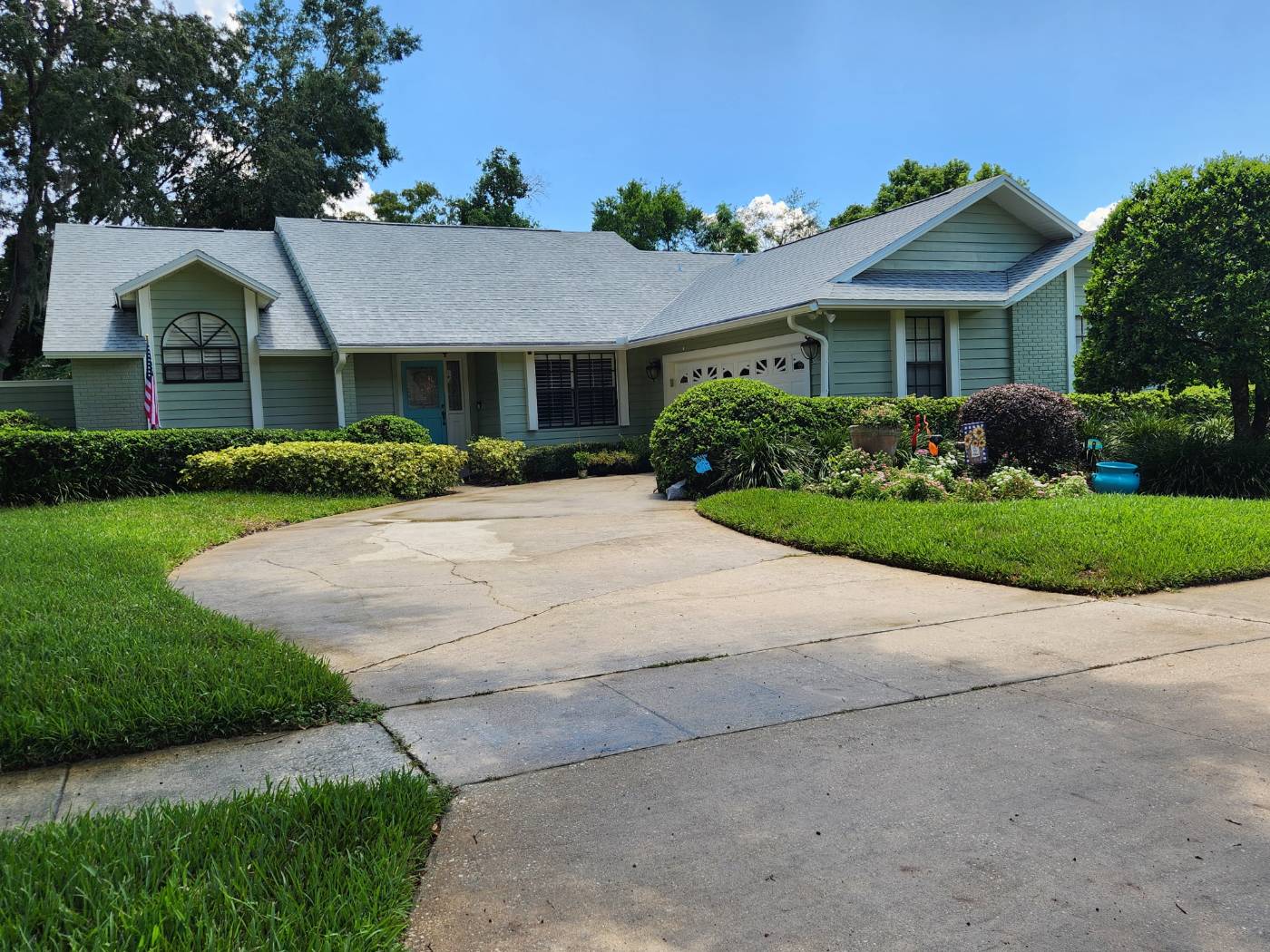
If you’ve been staring at a chalky wall or a gray strip of fascia all summer, here’s the good news: the season you’ve been waiting for just started. In Central Florida, fall and winter are when exterior paint has its best shot at going on right and staying on. The air dries out, the afternoon storms back off, and a crew can prep, coat and let the paint cure without racing the radar.
And if you want the house looking sharp before family shows up for the holidays, now’s the time to get your exterior house painting on the calendar.
The short version
In Central Florida, the dry season usually starts in mid-October and runs until late May. Drier air, fewer afternoon storms and milder temperatures make fall and winter the best time to paint your home’s exterior.
When does the dry season actually start?
It’s not just a feeling. The National Weather Service office that covers Orlando tracks it. In Orlando, the dry season typically starts around mid-October, and the rainy season typically doesn’t return until late May. That’s a long stretch of better painting weather, and we’re at the front of it right now.
The rain numbers show the difference. Here’s what Orlando normally gets, according to the National Weather Service:
| Month | Normal rainfall | Normal high |
|---|---|---|
| July | 7.46 in. | 92°F |
| October | 3.46 in. | 88°F → 81°F |
| November | 1.79 in. | 81°F → 76°F |
| December | 2.48 in. | 76°F → 72°F |
Orlando climate normals, 1991–2020. Highs show the start and end of each month.
Humidity follows the same pattern. The Weather Service says summer humidity, meaning dew points of 70 degrees or higher, comes back in late May, and showers and storms usually pick up within a few days. During the cool season, humidity is much lower, and rain sometimes falls only a few times in a whole month.
Why paint cares about the weather
Florida sun, afternoon rain and summer humidity can wreck a cheap exterior job in two seasons. Paint doesn’t just need to go on. It has to bond to a clean, dry surface and cure before the weather gets to it, and the paint makers spell out exactly what that takes.
- Dew point matters. Sherwin-Williams’ data sheet for its Duration exterior satin says the air, the surface and the paint should all be at least 5° above the dew point.
- Humidity slows everything down. Benjamin Moore’s data sheet for Aura exterior paint says high humidity and cool temperatures mean longer dry, recoat and cure times. Behr says the same about its Ultra exterior line.
- Rain needs a head start. That same Sherwin-Williams sheet says to avoid painting if rain is expected within 2 to 3 hours. Behr’s label for its Ultra exterior flat asks for at least 60 minutes of dry time before rain, and that’s in 60 to 70°F weather with 60 to 70% humidity. Higher humidity stretches that out. The Weather Service says you can usually count on afternoon cloud buildups in summer.
- Too hot is a real limit. That same Behr label lists a working range of 35 to 90°F for air and surface temperature. Orlando’s normal high in July is 92°F.
So doesn’t winter get too cold? Not around here. Those same labels set the bottom of the range at 35°F (Sherwin-Williams and Behr) or 40°F (Benjamin Moore). Orlando’s normal low on the last day of December is about 50°F. A typical Central Florida winter day sits comfortably inside the range for a quality exterior paint.
What the dry season does for exterior house painting
- Drier surfaces. Stucco and wood actually dry out after washing, so primer and paint bond to the wall instead of to trapped moisture.
- Fewer rain delays. Without a storm building every afternoon, a job runs closer to its schedule.
- Milder working temperatures. Orlando’s normal high drops from 88°F on October 1 to 72°F by December 31.
- A finished house before the holidays. Fresh walls, crisp trim and a clean front door make a big difference when the lights go up and the guests pull in.
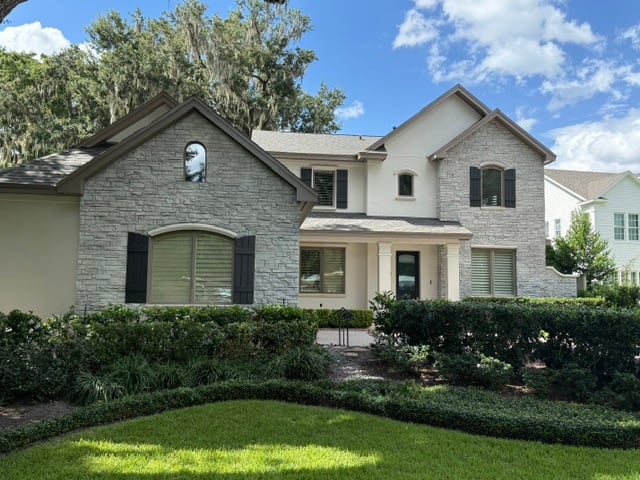
Summer jobs still get done. A typical single-story exterior takes us three to four days, and a two-story takes four to six. In summer, an afternoon storm can add a day. Your estimate comes with a date range either way. But if you’ve got the choice, the cooler months make the whole job easier on the paint.
Want it done before the holidays?
Get a Free EstimateGet a Free Estimate · Call (407) 394-1020
How we prep an exterior before a single coat goes on
Timing helps, but exterior painting is only as good as the surface underneath it. From Apopka and Winter Springs up through Sorrento and Mount Dora, here’s what happens before we open a can on an exterior painting job:
- Walkthrough. We walk every side of the house, protect the landscaping and look for rot, failing caulk and cracks.
- Wash. Every exterior starts with a soft wash, not a blast, and the pressure washing is included. The surface dries fully before any primer goes on, because paint won’t bond to mildew, dirt or chalk.
- Repair. Settling and hairline cracks get sealed with elastomeric, and caulk goes where it’s needed. If we find rotted wood, we photograph it, show you, and price the wood repair before we touch it. Our own carpentry crew handles the replacement. We don’t paint over rot.
- Protect and mask. Windows and anything that isn’t getting paint gets covered.
- Coat. Masonry conditioner or sealer where the surface calls for it, then spraying and back-rolling for even coverage, with trim brushed and rolled by hand. We use professional coatings from Sherwin-Williams, Behr and Benjamin Moore, matched to your surfaces and Florida’s climate.
- Final walkthrough. We walk it with you before we call it done.
Two coats are standard on every exterior we paint. If you’re making a dramatic change or going to a deep color, it gets a third coat, and we price that up front.
Signs your house is ready for a repaint
Not sure if this is your year? Rub your hand on the wall. If it comes away chalky, the paint is breaking down. Other signs:
- Hairline cracks opening at the corners of stucco walls
- Faded color on the west and south sides compared to the rest of the house
- Caulk pulling away around windows and trim
- Soft spots in fascia, soffit or door jambs
- Mildew coming back right after you wash it off
Around here, stucco paint typically lasts seven to ten years and siding five to seven, and the west- and south-facing walls fail first. If you’re seeing two or three of these signs, it’s worth getting a free estimate before the dry season fills up.
Plan ahead if you’ve got an HOA
If your neighborhood needs color approval, build that into your timeline. We’ll put samples on the wall, give you the manufacturer color codes your board needs, and wait for approval before we schedule. Starting that early is the easiest way to keep a fall project from sliding into spring.
Common questions
How long does an exterior paint job take?
Three to four days for a typical single-story, four to six for a two-story.
Do you pressure wash first?
Always, and it’s included.
What happens if you find rotted wood?
We photograph it, show you, and price the repair before we touch it. Rot behind fresh paint is the single most common way a repaint fails early, so we don’t coat over it.
How often does a Florida house need repainting?
Stucco typically lasts seven to ten years here, siding five to seven.
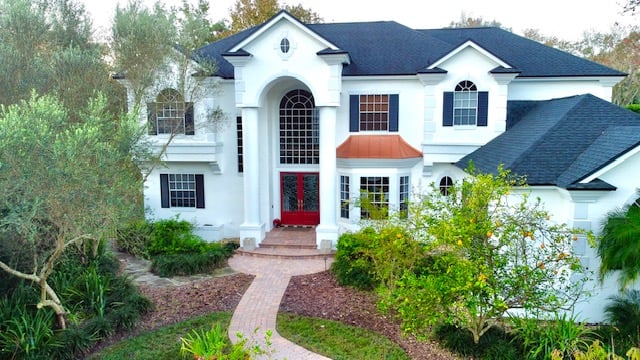
Get on the calendar while the weather’s on your side
Kingdom Painting is a family-owned exterior painting company based in Apopka. We’ll walk every side of your house, find the rot and the failing caulk, and give you a written number. Estimates are free, and there’s no pushy follow-up.
If you want it done before the holidays, the sooner you call, the better.
Get a Free EstimateGet a Free Estimate · Call (407) 394-1020
Or call (407) 394-1020, Monday to Friday, 7:30am to 4:30pm.