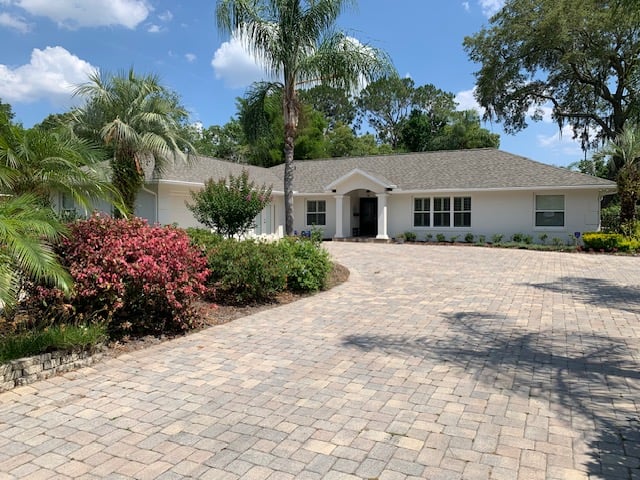
Paver sealing cost in Florida typically runs $1.50 to $3.25 per square foot for cleaning, re-sanding and sealing (HomeGuide, 2026). Angi puts the average clean-and-reseal job at $400, with most homeowners paying between $300 and $550 (Angi, 2025 data). These are typical national ranges, not Kingdom Painting’s prices. Call for a free, no-pressure estimate on your driveway or pool deck.
Paver sealing cost at a glance
| Square feet | Average total cost |
|---|---|
| 100 | $220 to $325 |
| 250 | $550 to $820 |
| 500 | $875 to $1,475 |
| 1,000 | $1,750 to $2,950 |
| 1,500 | $2,625 to $4,425 |
| 2,000 | $3,500 to $5,900 |
Source: HomeGuide, 2026.
Cost per square foot by job size
| Job size | Cost per square foot |
|---|---|
| Under 500 sq ft | $2.20 to $3.25 |
| 501 to 2,000 sq ft | $1.75 to $2.95 |
| Over 2,000 sq ft | $1.50 to $2.20 |
Source: HomeGuide, 2026.
Bigger areas cost less per square foot. A small patio pays a premium on paver cleaning and sealing cost; a large driveway or pool deck spreads the labor cost over more space. That HomeGuide range includes pressure washing the area, filling gaps with paver sand and applying the sealer.
Want a real number for your pavers?
What drives the cost to seal pavers in Central Florida
Square footage
Size sets your paver sealing cost more than anything else. A patio under 500 square feet runs $2.20 to $3.25 per square foot. A driveway between 501 and 2,000 square feet runs $1.75 to $2.95 per square foot. Anything over 2,000 square feet drops to $1.50 to $2.20 per square foot (HomeGuide, 2026).
Cleaning first
Pressure washing alone runs $0.35 to $0.80 per square foot (HomeGuide, 2026), and that pressure washing cost is built into every sealing job. Florida humidity breeds mildew and algae fast. Penetrating or not, no paver sealer bonds to a dirty surface. Sealer applied over that growth traps it underneath instead of protecting the pavers, so it has to be killed first.
Re-sanding the joints
Polymeric sand gets swept into the joints and compacted, and any rocking pavers get reset first. Gator’s data sheet calls for waiting at least 48 hours after applying polymeric sand, in temperatures of 60°F or warmer, with no rain, before sealing (Alliance Gator TDS).
Sealer type
The two main types of paver sealer trade off cost, life and finish. Water-based is a penetrating sealer that soaks into the pavers and stabilizes the joint sand, while solvent-based gives a higher shine (HomeGuide, 2026).
| Solvent-based | Water-based | |
|---|---|---|
| Cost per gallon | $32 to $55 (Angi) | $40 to $90 (Angi) |
| Typical life | Up to 5 years (Angi) | About 2 years (Angi) |
| Finish | High shine (HomeGuide, 2026) | Not as shiny (HomeGuide, 2026) |
| Joint sand | Doesn’t stabilize (HomeGuide, 2026) | Stabilizes (HomeGuide, 2026) |
Sun and rain exposure
In Kingdom’s experience, full sun and tire traffic wear sealer fastest, so the apron by the street goes first, while shaded walkways and covered lanais hold their seal longer.
Repairs, stains and access
The price to seal pavers goes up with heavy stains or calcium deposits, cracked pavers that need replacing, areas that need releveling or drainage fixes, sloped areas, and patio furniture or a grill that has to be moved (HomeGuide, 2026). Some contractors also charge a minimum job fee, which raises the per-square-foot price on small jobs.
How often should pavers be sealed in Florida?
Kingdom Painting’s typical seal life is 3 to 5 years on a Florida driveway, longer on shaded walkways or covered lanais. HomeGuide also puts sealer life at 3 to 5 years, depending on sealer type, use, climate, and trees (HomeGuide, 2026). If your pavers are new, paver makers generally recommend waiting 60 days after installation before sealing (Alliance Gator TDS).
When is the best time to seal pavers in Central Florida?
Orlando’s dry season typically starts around October 15, based on the median date (NWS Melbourne). November averages 1.79 inches of rain in Orlando, compared with 7.46 inches in July (NWS, 1991-2020 normals), and November’s normal high is 78.3°F. Gator’s data sheet calls for applying sealer between 40°F and 85°F, on a dry surface, with no rain expected within 24 hours (Alliance Gator TDS). That makes late fall a good window for sealing pavers in Central Florida, and it gets your driveway done before holiday guests arrive.
Signs your pavers need resealing
Here’s what Kingdom’s crews look for on Central Florida driveways:
- Color’s gone chalky or gray. Pavers weather gray over time, and sealer brings the color back.
- Weeds or ants popping up in the joints. They’re living in loose joint sand.
- Joint sand washing out, with pavers starting to rock. Joint sand is structural, so once it goes, edges start to sink.
- Oil soaking into the paver instead of sitting on top. On a sealed driveway, a drip just sits there long enough to wipe up.
- Mildew and algae rooting into the surface. Unsealed pavers give growth something to hold.
Between sealings
A sealed surface still collects mildew and algae, but growth can’t root into it the way it does on bare pavers. That’s why the yearly wash between sealings is a quick rinse instead of a deep clean.
Why prep is the whole job
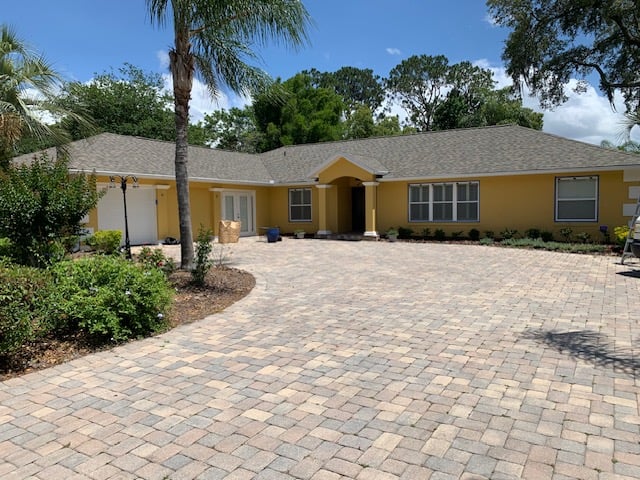
Sealer only lasts as long as the prep underneath it. Here’s how Kingdom Painting’s paver sealing service handles a driveway or pool deck over three days.
Day 1: Clean and kill what’s growing
Kingdom’s crew pulls weeds from the joints, applies a surface cleaner for an even finish, and treats rust or oil spots before anything else happens.
Day 2: Dry, then re-sand
The surface needs a full 24 to 48 hours to dry, longer during humid stretches. Once it’s dry, Kingdom’s crew sweeps in polymeric sand, compacts it level, and resets any rocking pavers before they get locked in.
Day 3: Two coats
Kingdom’s crew applies two coats, the second perpendicular to the first. You pick the finish after seeing both on a small test area: matte reads as natural stone with deeper color, wet look is glossier. Around pools, the crew adds a grit additive for traction.
Sealer applied over damp pavers turns milky white. That’s exactly why the drying day exists.
If your paver sealing coincides with a repaint, it’s worth doing both at once. Scheduling exterior painting and paver sealing together saves a separate site visit. Kingdom Painting also serves homeowners in Lake Mary and across Central Florida.
Paver sealing FAQs
How much does it cost to seal pavers?
Cleaning, re-sanding, and sealing typically runs $1.50 to $3.25 per square foot (HomeGuide, 2026). Angi puts the average job at $400, with most homeowners paying between $300 and $550 (Angi, 2025 data).
How often should pavers be sealed in Florida?
Most Florida pavers need resealing every 3 to 5 years, depending on sealer type, use, climate, and trees (HomeGuide, 2026). Shaded walkways and covered lanais often go longer between seals.
Can you seal new pavers right away?
No. Paver makers generally recommend waiting 60 days after installation before sealing (Alliance Gator TDS).
Why do some sealed pavers turn white?
Sealer applied over damp pavers, or pavers that haven’t finished drying, turns milky white. That’s why a full dry period comes before sealing.
Do I have to move my cars?
Yes, for the drying day and for 24 to 48 hours after the sealer goes down.
Will sealed pavers get slippery?
Around a pool, Kingdom adds a grit additive to keep traction. On driveways and walkways, it isn’t an issue in normal use.
Get a free paver sealing estimate
Kingdom Painting is a family-owned, licensed and insured exterior painting company based in Sorrento, serving Apopka, Altamonte Springs and the rest of Central Florida. As part of Kingdom’s paver sealing services, the crew measures the area, checks the joints and any old sealer, and gives you a free written estimate, no pressure, no follow-up sales calls. Call (407) 394-1020 or fill out the estimate form to get your number.
Want a real number for your pavers, in writing?
Get a Free EstimateGet a Free Estimate
Or call (407) 394-1020, Monday to Friday, 8:00am to 4:30pm.